
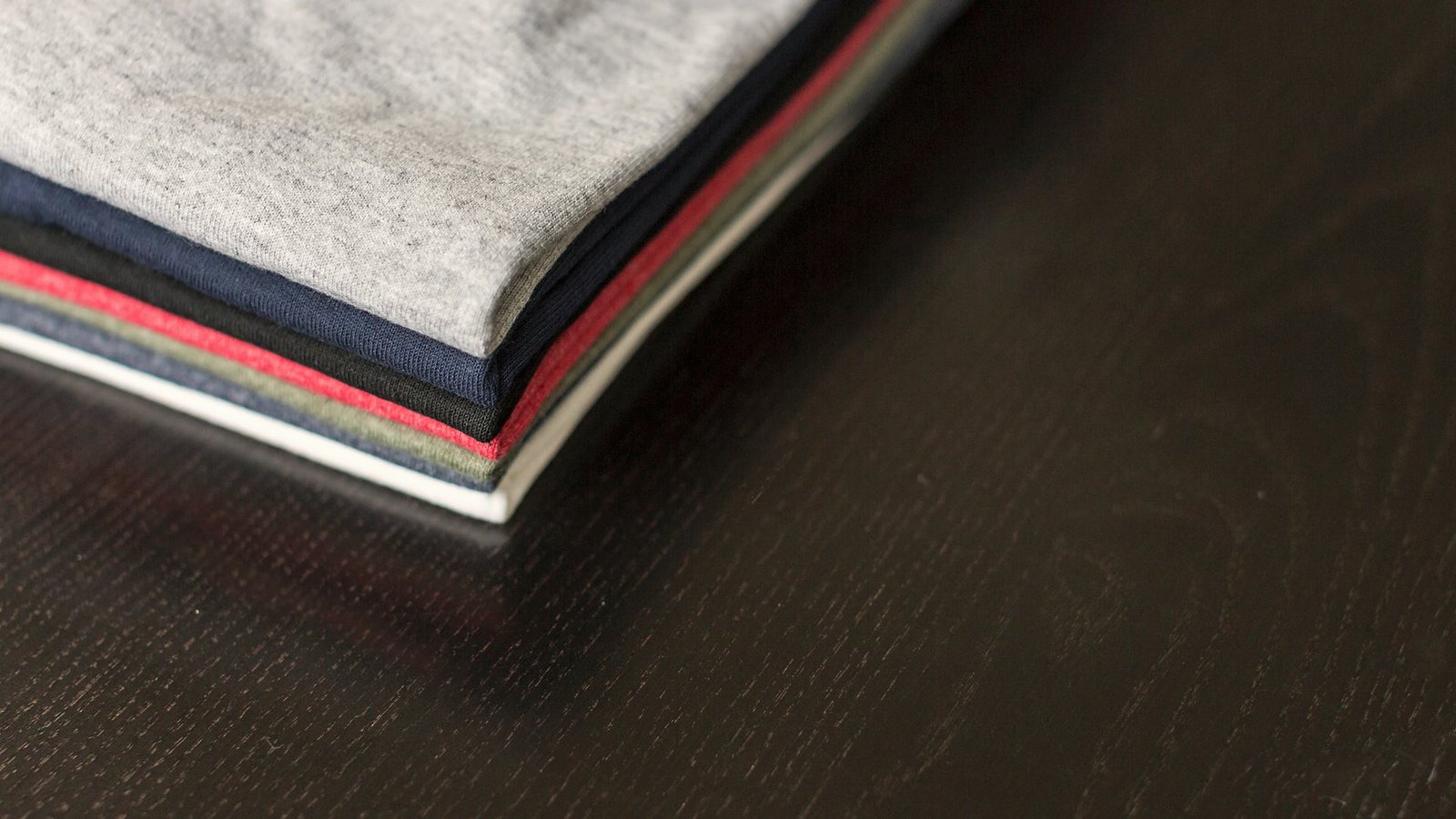
If you have ever bought a t-shirt that looked great in the shop and sad after five washes, the fabric weight was probably the reason. That weight is measured in GSM, and it’s worth understanding.
What GSM measures
GSM stands for grams per square meter. It’s the weight of one square meter of fabric. The higher the number, the denser and thicker the material.
- Under 150 GSM: lightweight. Thin, often slightly see-through, common in cheap promotional tees.
- 150 to 200 GSM: midweight. The standard for most high street t-shirts.
- 200 to 250 GSM: heavier. More structure, less cling.
- Over 250 GSM: heavyweight. Dense, opaque and structured, with a drape that holds its shape.
Our Heavyweight Organic Tee is 260 GSM, and our hoodie fleece is 420 GSM.
Why heavier fabric lasts longer
A denser knit has more yarn in every square inch. That means the fabric resists stretching at the collar and hem, holds up better to washing and is less likely to develop holes. It also keeps its color longer because there’s simply more fiber to wear through.
How it changes the fit
Heavyweight cotton sits away from the body rather than clinging to it. That’s why heavyweight tees look neater on most people. They skim rather than hug, and they hide creases and outlines that thinner fabric shows.
Is heavier always better?
Not always. Heavyweight cotton is warmer, so in very hot weather a lighter tee or a linen shirt may be more comfortable. And for layering under a fitted knit, a midweight long sleeve works better than a thick tee. The right weight depends on what you’re using it for.
How to make it last even longer
- Wash cold and inside out to protect the surface
- Skip the dryer when you can, or use the lowest heat
- Fold heavy knits instead of hanging them, so the shoulders don’t stretch
- Wash less often. Airing out a tee between wears is often enough
Good fabric is the start. Gentle care does the rest.